
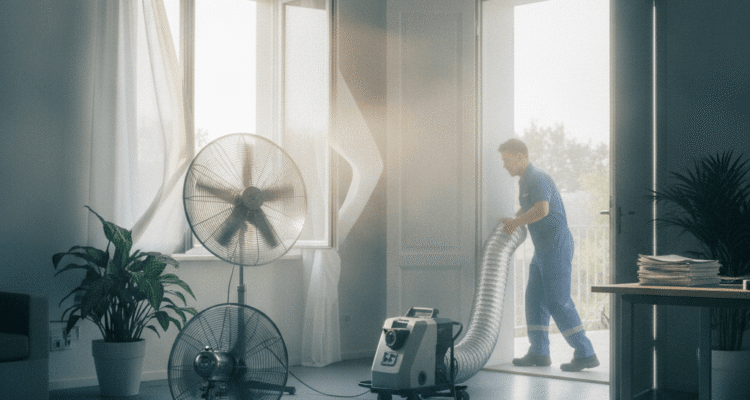
As someone who enjoys making things better in the home, I have learned a lot about what keeps a living space comfortable and efficient. One area often overlooked is the movement of air within our homes. Good air circulation is more than just about feeling a breeze it impacts your comfort, energy bills, and even your health.
I know firsthand the frustration that comes when air stops moving as it should. A stuffy room or an unevenly cooled house can quickly turn a peaceful day into an uncomfortable one. Addressing these issues promptly is not just a convenience it is a necessity for maintaining a healthy and pleasant environment.
This article will explore practical steps you can take for restoring air circulation quickly. We will look at common problems and offer clear solutions. My goal is to equip you with the knowledge to diagnose and fix airflow issues yourself or understand when it is time to call in the professionals.
Understanding the Importance of Air Circulation
The flow of air through your home is a silent workhorse, constantly impacting your daily life. When it works well, you barely notice it. But when it falters, you feel it in every corner of your living space. Proper air circulation helps distribute conditioned air evenly, whether from your heating or cooling system.
I often think about how much we rely on our HVAC systems for comfort. Without good airflow, even the most powerful air conditioner or furnace will struggle. It leads to hot spots in summer and cold spots in winter, making your home less enjoyable. This also means your system works harder than it needs to, which wastes energy and increases utility costs.
Beyond comfort and cost, healthy air movement reduces the buildup of stale air, odors, and indoor pollutants. This is especially important for individuals with allergies or respiratory sensitivities. I have always found that a home with fresh moving air just feels cleaner and more inviting.
Why Good Airflow Matters for Your Home
Good airflow ensures that treated air reaches every room, preventing extreme temperature differences. It also helps manage humidity levels. High humidity can make a home feel clammy and promote mold growth. Moving air helps to dry out surfaces and keeps moisture from settling.
Consider the lifespan of your HVAC system. When air circulation is poor, the system faces increased strain. Components like the blower motor and compressor have to work overtime to push or pull air through restricted pathways. This extra effort can lead to premature wear and tear, and it can result in costly repairs or even early system replacement.
I always emphasize that investing a little time in maintaining good air circulation now can save you a lot of money and headaches later. It is a simple yet effective way to protect your home’s comfort system and your family’s well-being.
Common Culprits Behind Poor Air Circulation
Identifying the root cause of poor air circulation is the first step toward fixing it. Many times, the issue is simpler than you might expect. I have seen various problems over the years, from basic oversights to more complex system faults. Understanding these common culprits helps you narrow down your search.
Often, the problem starts with routine maintenance. Things like dirty filters can severely restrict airflow. Other times, the issue might be with how your home’s ductwork is set up or if it has developed leaks. Sometimes, even seemingly small blockages can create significant disruptions to your air movement.
I encourage homeowners to be observant. Pay attention to signs like weak airflow from vents, unusual noises from your HVAC unit, or rooms that consistently feel hotter or colder than others. These clues can point you in the right direction to diagnose the problem.
Dirty Filters and Blocked Vents
A dirty air filter is perhaps the most frequent cause of poor air circulation. Over time, filters collect dust, pet dander, and other airborne particles. When a filter becomes clogged, your HVAC system has to work much harder to pull air through it. This reduces the volume of air flowing into your home.
Replacing your air filter regularly is an easy and inexpensive task that I always recommend. The frequency depends on your household, for example if you have pets or allergies. I usually suggest checking it monthly and changing it every one to three months. This simple step can make a big difference.
Blocked vents are another common issue. Furniture, curtains, or even household items can obstruct supply and return vents. If air cannot freely enter or exit a room, circulation will suffer. I always advise making sure all your vents are clear and unobstructed to allow for maximum airflow.
Issues with Ductwork
Beyond filters and vents, problems with your ductwork can severely hinder air circulation. Leaky ducts, for example, allow conditioned air to escape into unconditioned spaces like attics or crawl spaces. This means less air reaches your living areas, and your system has to run longer to compensate.
I have also seen instances where ducts become disconnected or damaged over time, especially in older homes. This can be due to shifting foundations or even rodent activity. Pinpointing these leaks or damages can be challenging because ductwork is often hidden behind walls and ceilings.
Another issue is improperly sized or designed ductwork. If your ducts are too small for your home or system, they will never be able to deliver adequate airflow. This is a more complex problem that usually requires professional assessment, but it is worth considering if other solutions do not work.
Immediate Steps for Restoring Air Circulation Quickly
When you notice a sudden drop in air circulation, there are several immediate actions you can take to try and fix the problem. These steps are often simple and do not require specialized tools or knowledge. I always start with the easiest things first, because many issues can be resolved quickly.
First, walk through your home and check all your air vents. Make sure they are open and not blocked by furniture, rugs, or other items. Sometimes, a vent might have been accidentally closed or covered. Clearing these obstructions can immediately improve airflow in that specific area.
Next, head to your thermostat. Check that it is set to the correct mode, usually “cool” or “heat” depending on the season, and that the fan setting is on “auto” or “on”. Sometimes a simple reset of the thermostat or checking its battery can resolve minor glitches affecting your system’s operation.
Checking Your HVAC System
After checking your vents and thermostat, your next focus should be on the core of your HVAC system. The air filter is always my first stop. A clogged filter is a major restriction to airflow. I recommend replacing it with a clean one if it looks dirty.
While you are at the indoor unit, check for any visible debris or blockages around the blower motor area. Sometimes, leaves or other small items can get sucked in and impede the fan’s operation. I always make sure the power is off before I open anything up. If your central AC has completely stopped working, you should read what to do when your central AC stops working to understand more about initial troubleshooting steps.
Outside, check your outdoor unit, the condenser. Ensure it is not covered by leaves, dirt, or other landscaping debris. The condenser coil needs good airflow to release heat. Hosing it down gently with water to clear any surface grime can sometimes help improve its efficiency and overall system performance.
DIY Fixes You Can Try for Better Airflow
Many common air circulation problems can be solved with a few simple DIY efforts. I have found that taking a proactive approach can save both time and money. These fixes usually involve basic cleaning and adjustments.
One of the easiest things is to regularly dust and vacuum around your air vents. Dust bunnies can build up surprisingly fast and obstruct the flow. Using a vacuum cleaner with a brush attachment works well for this. I also sometimes use a damp cloth to wipe down the grilles.
For ceiling vents, a step stool and a long duster can reach those high spots. Remember, clear vents are happy vents. Good airflow relies on open pathways throughout your home’s system, so this simple cleaning routine makes a big difference.
Cleaning and Clearing Obstructions
Beyond just surface cleaning, I also look at more specific areas that tend to get clogged. The condensate drain line is one such place. This line carries away moisture removed from the air by your AC system. If it gets clogged with algae or debris, water can back up, which sometimes triggers a safety switch that shuts down your system.
You can often clear a minor clog in the condensate drain line yourself by pouring a cup of distilled vinegar down the access port. Let it sit for about 30 minutes, then flush it with water. This can help clear out the buildup. I make sure to do this a few times a year as preventive maintenance.
Another area to consider is the return air grilles. These are usually larger than supply vents and often located in central areas or hallways. They can collect a lot of dust and pet hair. Giving these grilles a thorough cleaning with a vacuum and a damp cloth will improve the amount of air being pulled back into the system.
Simple Airflow Adjustments
Sometimes, air circulation issues are not caused by blockages but by how air is directed. I often suggest adjusting the louvers on your supply vents. Directing air towards the center of the room rather than directly at a wall can help it mix better and spread more evenly.
If you have multiple floors, try to balance the airflow by slightly closing vents on floors that are already comfortable and opening them more on floors that need more conditioning. This is called zoning and it can help direct more air to where it is needed most. It takes a little trial and error to get it right.
Another simple trick is to use ceiling fans. Running ceiling fans clockwise in winter on a low speed can push warm air down, and counter-clockwise in summer can create a cooling breeze. This helps distribute air throughout the room and supports your main HVAC system, improving overall circulation.
When to Call the Professionals for Airflow Problems
While many airflow problems are fixable with DIY methods, some issues require the specialized skills and tools of a professional. I have learned that knowing when to call for help is just as important as knowing what you can fix yourself. Attempting complex repairs without proper training can lead to more damage or even personal injury.
If you have tried the basic troubleshooting steps like changing filters, clearing vents, and cleaning the outdoor unit, but your air circulation issues persist, it is likely time to contact an HVAC technician. They can perform a thorough diagnostic to identify underlying problems that are not visible to the untrained eye.
For example, issues within the internal components of your HVAC system, such as a failing blower motor, a refrigerant leak, or a faulty control board, are best left to experts. These components are complex and require specific knowledge to repair or replace safely and effectively.
Signs You Need Expert Help
There are clear signs that indicate a professional inspection is needed. If you hear unusual noises coming from your HVAC unit, like grinding, squealing, or persistent banging, it often points to a mechanical problem. These noises are not normal and should not be ignored because they can signal a failing part.
Another strong indicator is a sudden and significant increase in your energy bills without a change in usage habits. This often means your system is working much harder than it should be, possibly due to a major restriction in airflow or a component failure. Professionals can pinpoint these inefficiencies.
If you notice strange smells emanating from your vents, like a burning odor or a musty smell, it can indicate electrical problems or mold growth within your ducts. These issues pose health and safety risks and require immediate professional attention to ensure your system is safe and clean.
Long-Term Strategies for Optimal Air Quality and Circulation
Restoring air circulation quickly is often about addressing immediate problems, but maintaining optimal air quality and flow requires a long-term strategy. I believe a healthy home environment is built on consistent care and smart choices. This means thinking beyond quick fixes and planning for the future of your home’s systems.
Regular professional HVAC maintenance is at the top of my list. Having a qualified technician inspect your system annually ensures that all components are running efficiently and that potential problems are caught before they become major issues. They can clean coils, check refrigerant levels, inspect electrical connections, and make sure your ducts are sealed and free of leaks. This preventive care is an investment in your home’s comfort and the longevity of your equipment.
Consider upgrading to a higher-efficiency air filter, such as a MERV 8 or higher, which can trap more microscopic particles, improving air quality without overly restricting airflow. I also recommend investing in smart thermostats that allow for programmable schedules and remote control, helping you manage temperatures and airflow more effectively throughout the day. Sealing air leaks around windows and doors and ensuring proper insulation will also support your HVAC system by keeping conditioned air where it belongs, easing the burden on your circulation system. By combining these proactive measures, you can enjoy a consistently comfortable home with fresh, circulating air, ensuring a pleasant living space for years to come.